
What franchise directors, retail property managers and brand managers need to know before the first sign goes up.
A multi-location brand rollout is one of the most logistically complex programmes a growing business executes. Whether you are opening your fifth franchise location, rebranding a network of thirty retail stores, or fitting out a new commercial property with tenant and wayfinding signage, the variables are significant and the margin for error is narrow. Timelines are tight. Stakeholders are numerous. And every location that opens looking different from the last one is a visible, public failure of the brand discipline that justified the rollout in the first place.
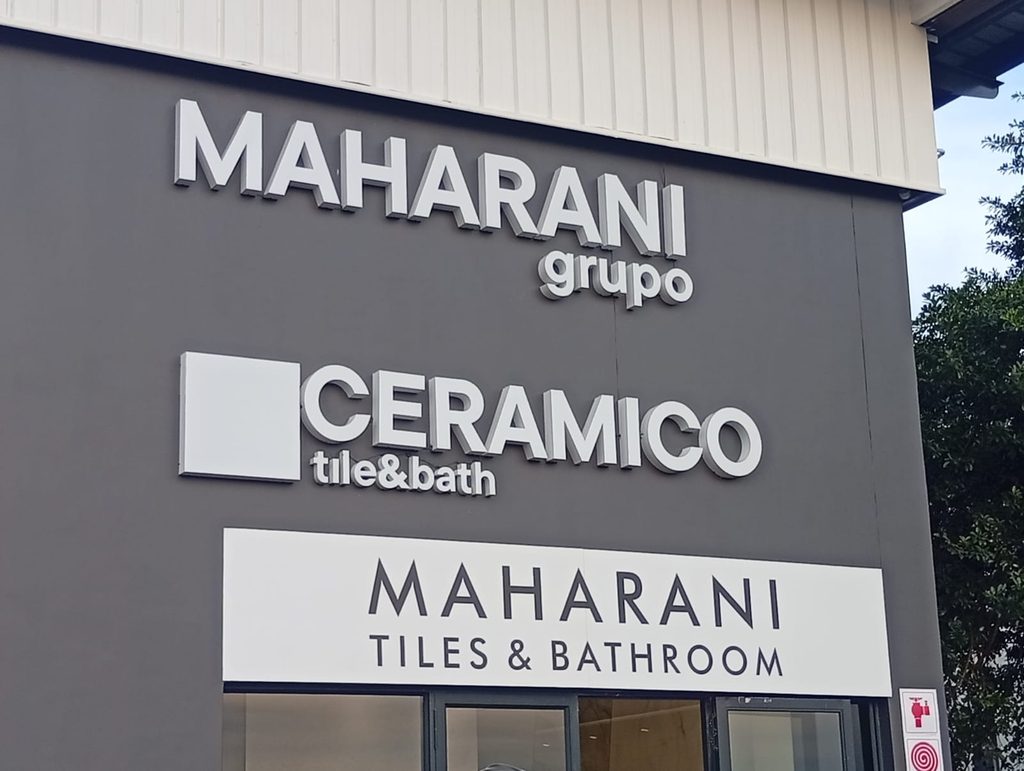
Signage is the element that almost every rollout team underestimates — until something goes wrong. By the time a brand manager notices that the Pinetown branch colour is three shades off from the Umhlanga flagship, the sign has been up for six months. By the time a facilities director discovers that the external pylon at the new Port Elizabeth location was installed without a structural engineer's certificate, the compliance exposure has already accrued. By the time the franchise director realises that four different suppliers have produced four different interpretations of the approved design across the KZN network, the cost of remediation is larger than the cost of getting it right the first time would have been.
This article is about getting it right the first time.
Signage is the element that almost every rollout team underestimates — until something goes wrong.
What a Multi-Location Brand Rollout Actually Involves
Before discussing signage specifically, it is worth mapping the full complexity of a multi-location rollout — because understanding where signage sits in the larger programme is essential to understanding why it requires more planning than most rollout teams allocate to it.
A typical multi-location rollout involves some combination of the following workstreams, each with its own timeline, stakeholder set and dependency chain:
Site Acquisition and Fit-Out
Each location must be secured, handed over from the landlord, fitted out to the brand standard and signed off before trading can begin. The fit-out programme — ceilings, flooring, electrical, plumbing, shopfronting — is typically the longest lead-time item and the one most likely to run over schedule. Signage is almost always sequenced after the fit-out, which means delays in fit-out compress the signage timeline without reducing its complexity.
Corporate Identity Implementation
The brand's physical identity — logo, colour palette, typography, sign specifications, material standards — must be translated into specific sign types for each location. This is not a creative exercise. It is an engineering exercise. The approved design must account for the specific substrate at each location, the specific dimensions of each facade, the specific permit requirements of each local authority and the specific material degradation environment of each geographic zone.
A CI document that was designed for a Johannesburg environment and applied without modification to a KZN coastal location will produce signs that fail faster than the brand standards allow. More on this shortly.
Permit and Compliance Management
Every external sign of any scale requires a permit from the relevant local authority. In eThekwini, this is governed by the eThekwini Municipal Signage Bylaw. In Cape Town, the City of Cape Town Outdoor Advertising Bylaw. In Johannesburg, the Johannesburg Metropolitan Municipality Signage Bylaw. Each municipality has different requirements, different submission formats, different approval timelines and different enforcement postures.
On a rollout across multiple provinces, permit management is itself a programme. Submitting incorrect or incomplete applications delays installation. Installing without a permit creates compliance exposure that can result in notices to remove — at the tenant's cost, not the landlord's. A signage partner who does not manage permits in-house is a liability on a multi-location rollout.
Supply Chain and Production Management
A ten-location rollout requires that ten sets of sign panels, fixings and electrical components are produced to the same specification, quality-checked against the approved design and dispatched to ten different sites in a coordinated sequence that aligns with the fit-out completion schedule at each location. This is logistics as much as it is fabrication.
When production is subcontracted to multiple suppliers — which is the standard model for most large signage companies managing national rollouts — quality consistency becomes the primary risk. Each supplier interprets the specification slightly differently. Each has different colour profile settings on their printing equipment. Each has different quality control standards. The result, across ten locations and three subcontractors, is a network of signs that are approximately correct but not precisely correct. In a brand rollout, approximately correct is brand drift in slow motion.
Installation and Certification
Installation must be coordinated with site access, fit-out completion, trading launch dates and municipal inspection requirements. On a multi-location rollout, the installation programme runs across weeks or months, with different locations at different stages simultaneously. A project manager who is not physically present at each installation — or who relies on subcontracted installation teams with no direct accountability to the brand — is managing a programme by assumption rather than by oversight.
Certification requirements add a further layer. Every illuminated sign requires a Certificate of Compliance from a registered electrician under the Electrical Installation Regulations promulgated under the OHS Act. Every large-format pylon or structural sign requires certification from a registered professional engineer confirming compliance with SANS 10160 wind load requirements. On a ten-location rollout, this is ten sets of compliance documentation — each of which must be in place before the relevant sign is energised or opened to the public.
Photographic Handover and Documentation
When the rollout is complete, the brand manager needs a documented record of what was installed at each location — the photographic baseline that will serve as the warranty reference, the insurance record and the CI comparison point when location eleven is added to the network in two years. Without this documentation, every future signage decision starts from a rebriefing rather than from an existing record.
On a rollout across multiple provinces, permit management is itself a programme — not a task.
The Role Signage Plays - and Why It Is More Important Than Most Rollout Teams Think
Signage is the first and last physical brand impression at every location. It is what the customer sees before they enter the building and what they see as they leave. It is the brand element that operates twenty-four hours a day, seven days a week, without a media budget. A well-executed illuminated fascia generates brand impressions on every vehicle that passes on the adjacent road, every pedestrian who uses the pavement, every customer who uses the car park — at no cost beyond the installation investment.
But signage is also the brand element that degrades most visibly over time when it is not specified correctly for the environment it is installed in. A corporate identity that looks sharp and consistent across ten locations on opening day can look inconsistent, faded and poorly maintained across those same ten locations three years later — if the specification was wrong, if the materials were wrong or if no maintenance programme was in place.
Brand Consistency Across Locations
The single most important outcome of a multi-location signage rollout is that every location looks identical to every other location. Not similar. Identical. The colour on the Durban North branch must match the colour on the Westville branch must match the colour on the Pietermaritzburg branch — not because the brand manager is being pedantic, but because inconsistency between locations communicates something to the customer. It communicates that the brand is not managed. That standards are not enforced. That the business has grown faster than its quality control.
Achieving this consistency requires three things: a single production source for all panels on the rollout, physical colour approval against a calibrated reference standard before any production run commences, and CI documentation that is held on file and applied consistently to every location — including locations added to the network after the initial rollout is complete.
Signage as a Compliance Requirement
Beyond brand identity, signage on a multi-location rollout carries mandatory compliance obligations that cannot be deferred or approximated. OHS Act safety signage must be present in every location — emergency exits, hazard identification, fire equipment identification, mandatory action signs — and must comply with SANS 1186 specifications for pictogram design, colour coding and minimum viewing distances.
For illuminated signs, the COC requirement is not optional and it is not the client's responsibility to obtain — it is the electrical installer's legal obligation. A COC is the only document that confirms the installation is electrically safe. Its absence creates direct liability for the property occupant in the event of an electrical incident. On a multi-location rollout, every illuminated sign must have its own COC before it is switched on. This is non-negotiable.
Wayfinding as an Operational Requirement
On larger rollouts — particularly in commercial property, healthcare, education and hospitality environments — wayfinding signage is not a brand enhancement, it is an operational requirement. A building without effective wayfinding creates friction at the point of customer arrival. Reception staff spend time directing visitors who should be directing themselves. Emergency egress is compromised when evacuation route signage is absent or incorrectly specified.
SANS 10400 Part S establishes accessibility requirements for signage that must be met in all public buildings. A rollout that does not account for accessibility compliance from the design stage will require remediation after the fact — which is always more expensive than building it correctly the first time.
The colour on the Durban North branch must match the colour on the Westville branch. Not similar. Identical.
Why Designer Signs Is Positioned to Execute Multi-Location Rollouts
Designer Signs has been executing signage installations in KwaZulu-Natal since 2003. Over twenty-three years, the business has developed the operational infrastructure, technical knowledge and client management processes required to deliver a multi-location rollout to a consistent standard — across every site, every time.
Here is what that means in practice.
In-House Production - No Subcontractors
Every sign produced for a Designer Signs rollout is manufactured at our Morningside, Durban facility — in our print shop and fabrication workshop — by our own team. No subcontracted production. No external manufacturers interpreting our specification. No colour variance between batches produced in different facilities by different technicians.
This is the most important differentiator in a multi-location rollout context. When production is in-house, quality control is in-house. The same calibration settings, the same materials, the same team, the same standard — for location one and location ten. The CI documentation is applied from the same source on every production run. The panels that leave our facility for the Ballito branch are produced to the same specification as the panels that left our facility for the Umhlanga branch six weeks earlier.
The rollout advantage: A single in-house production source eliminates the primary cause of brand drift across multi-location signage programmes — variation between subcontracted manufacturers.
CI Documentation Management
Designer Signs holds client CI documentation permanently on file. Once a client's brand standards — logo files, Pantone references, approved typefaces, sign layout specifications, material standards — have been established on the first project, every subsequent location draws from the same source. The brand manager does not re-supply artwork. The facilities director does not re-specify materials. The new location is briefed, surveyed and produced from the existing CI record.
For franchise networks and retail chains adding locations incrementally over time, this means that location eleven added in 2028 is produced to the same specification as location one produced in 2025 — without any additional briefing overhead. The brand stays consistent across time as well as across geography.
The Six-Step Process - Applied to Every Location
Every Designer Signs project — regardless of whether it is a single-site installation or part of a fifty-location rollout — follows the same six-step process. This consistency is what makes a rollout manageable rather than chaotic.
Step 01: Site Survey
A physical site visit is mandatory before every location is quoted, designed or specified. The survey confirms substrate type, coastal zone classification, body corporate or building management restrictions, municipal permit requirements and access constraints. No location is assumed to be identical to the previous one.
Step 02: Written Design Sign-Off
No sign proceeds to production without written approval of the final design from the authorised client representative at that location. This creates a documented approval trail across the entire rollout — essential for brand governance on large programmes.
Step 03: In-House Production and Quality Control
All panels are produced at our Morningside facility and measured against the approved design before dispatch. Any variance from specification is corrected before the panels leave the building.
Step 04: Professional Installation
A Designer Signs project manager is on site at every installation. Working at Heights certification, current medicals, PPE and a safety file are in place at every elevated access installation. No unsupervised subcontractor installation.
Step 05: Certification
A COC from a registered electrician is obtained before every illuminated sign is energised. Structural engineer certificates are obtained for all pylon and large-format structural installations.
Step 06: Photographic Handover
Full photographic documentation of every completed installation is provided before the project is closed. Day and night photography for illuminated signs. This record becomes the CI baseline for every future location in the rollout.
Permit Management In-House
Designer Signs identifies permit requirements at the site survey stage — before design begins — and manages the full application process in-house for KZN locations. Technical drawings are prepared to the correct municipal submission standard. eThekwini Municipal Signage Bylaw requirements are accounted for in the design from the outset, not discovered after fabrication.
For rollouts spanning multiple provinces, Designer Signs manages the KZN locations directly and coordinates with vetted partners in other provinces — maintaining a single point of accountability for the brand manager regardless of geography.
B-BBEE Level 1 - 135% Procurement Recognition
For corporate clients, franchise groups and public sector organisations with B-BBEE procurement obligations, Designer Signs is a Level 1 Contributor — the highest classification available. Every rand spent with Designer Signs counts as R1.35 toward your B-BBEE spend targets under the 135% procurement recognition rate.
On a ten-location rollout with a R500,000 signage budget, the B-BBEE procurement value recognised is R675,000. This is not a marginal consideration on procurement scorecards — it is a material advantage that a non-compliant or lower-level supplier cannot match.
On a ten-location rollout with a R500,000 signage budget, Designer Signs' Level 1 status generates R675,000 in recognised B-BBEE procurement value.
Track Record Across Sectors
Designer Signs has executed signage programmes across corporate, retail, industrial, healthcare, public sector and hospitality environments. Relevant rollout and multi-site work includes:
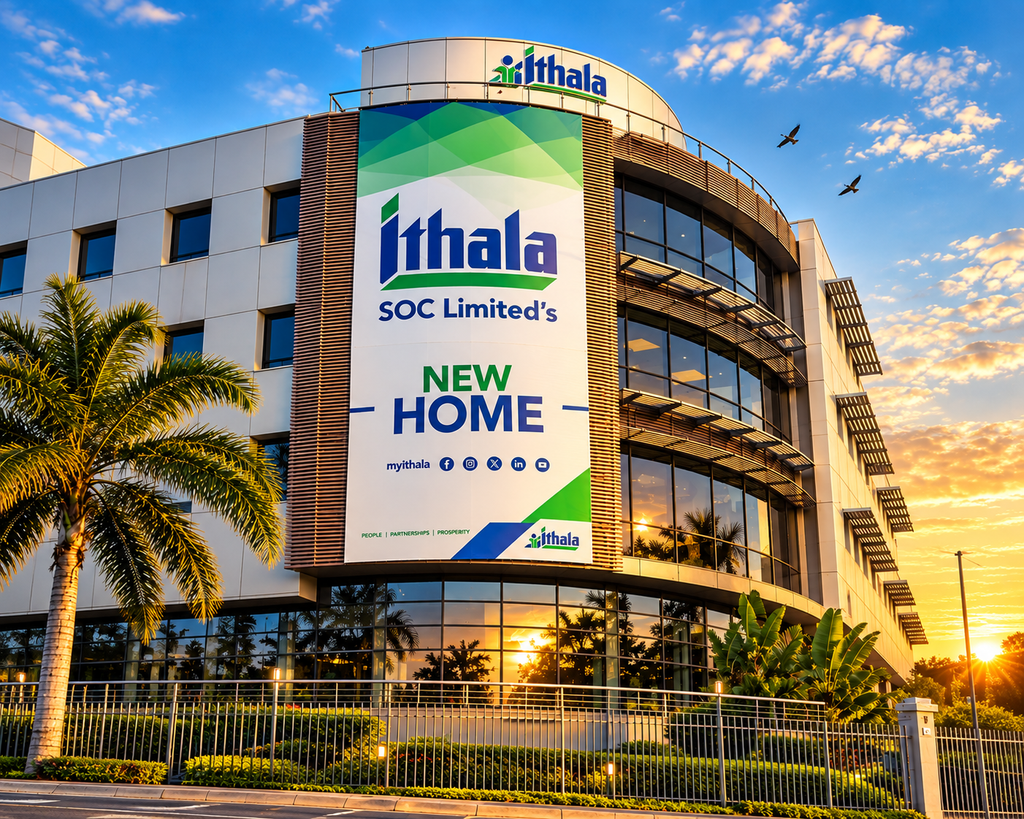
- Ithala Bank — multi-site fascia rollout across the KZN branch network
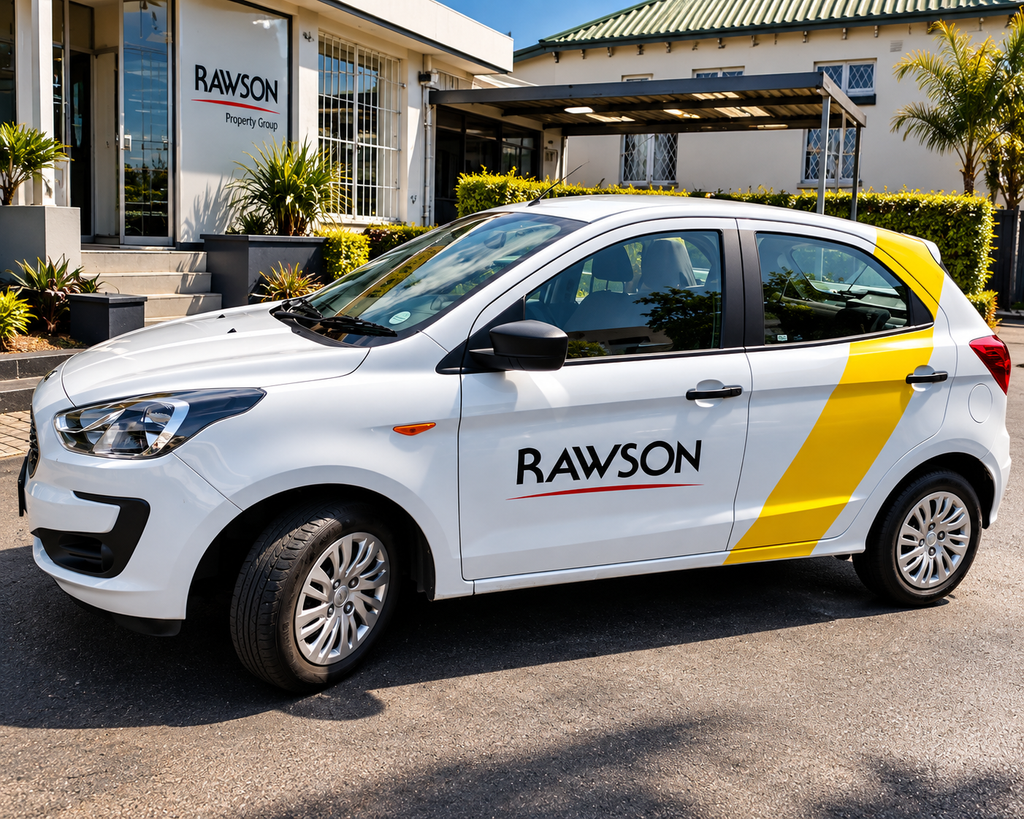
- Rawson Properties — vehicle fleet CI programme across KZN
- Department of Public Works — full building signage and wayfinding fitout, Kingsmead Office Park, Durban
- PPECB — complete building rebrand, Hillcrest KZN, dual-tenant environment
- uShaka Marine World — wayfinding system, Durban waterfront
- Beare Holdings — full Signage Standards Manual and tenant directory system, Musgrave, Durban
- Department of Health — safety and compliance signage, Eastern Cape facilities
All references are confirmed. All based on completed projects. Detailed case studies available on request.
The KZN and Coastal Specification Advantage - Your Call to Action
If your next multi-location rollout includes KwaZulu-Natal, you need a signage partner who specifies correctly for the KZN coastal environment. This is not a regional preference — it is a technical requirement that determines whether your signs look correct in year three or begin to fail in year two.
Here is what correct coastal specification looks like, and what Designer Signs delivers as standard on every KZN installation:
Fixings and Hardware
KwaZulu-Natal's coastal zones classify at C4 to C5 corrosivity under SANS 5719 / ISO 9223 — the second and third highest classifications in the standard. Standard zinc-plated mild steel fixings have a documented lifespan of 18 to 36 months in this environment before corrosion begins. Marine-grade 316 stainless steel fixings, correctly specified, last the design life of the sign.
Designer Signs specifies marine-grade 316 stainless steel fixings on all exterior KZN installations as the baseline standard. Not as an upgrade. Not as a premium option. As the minimum requirement for a sign that is expected to maintain its appearance and structural integrity for its intended design life.
The cost reality: The difference in materials cost between zinc-plated and marine-grade stainless fixings is marginal relative to the total installation cost. The difference in outcome — rust staining on your building facade versus a sign that looks correct throughout its design life — is not marginal at all.
Vinyl Specification
Two grades of vinyl are used in the signage industry: calendered and cast. Calendered vinyl is the lower-cost option — it is thinner, less conformable and has an outdoor durability rating of 3 to 5 years under ideal conditions. KZN's coastal UV environment is not ideal conditions for calendered vinyl. Expect visible fading and edge lifting within 18 to 36 months on exterior applications.
Cast vinyl has a 7-year outdoor durability rating and performs consistently under KZN coastal UV conditions. Designer Signs specifies 7-year premium cast vinyl on all fleet branding and exterior vinyl applications as the baseline standard. Calendered vinyl is not an option on any exterior coastal installation.
Electrical Components for Illuminated Signs
Exterior illuminated signs in KZN's coastal environment must use IP65-rated electrical components as the minimum standard. IP65 is the ingress protection rating that confirms the component is dust-tight and protected against water jets — the minimum rating for reliable performance in a high-humidity, salt-laden coastal environment.
Standard-rated components allow moisture ingress. In KZN's coastal environment, moisture and electrical components produce dead LED modules, failed drivers and premature sign failure. IP65 rating is not a premium specification on a KZN coastal installation — it is the baseline requirement.
Every illuminated sign installed by Designer Signs uses IP65-rated components as standard. Every illuminated installation closes with a Certificate of Compliance from a registered electrician. This is not something we do on some installations — it is something we do on every installation.
Sealed Aluminium Extrusions
The aluminium extrusions used in sign construction — frames, returns, channels — must be correctly sealed and treated for coastal environments. Unsealed aluminium in a high-humidity, salt-laden environment will oxidise and pit over time, compromising both the structural integrity and the appearance of the sign. Designer Signs uses appropriately sealed and treated aluminium extrusions on all coastal installations as standard.
PLANNING A MULTI-LOCATION ROLLOUT IN KZN?
Talk to Designer Signs before your first sign goes up.
We offer a free Signage Standards Audit for multi-location programmes — a professional assessment of your current signage estate or your proposed rollout specification, delivered as a written report. We identify specification gaps before they become installation failures.
What we bring to your rollout:
- In-house production — no subcontractors, no colour variance between locations
- CI documentation held on file — every future location drawn from the same source
- Correct coastal specification as standard — marine-grade fixings, cast vinyl, IP65- rated components
- Permit management in-house — eThekwini Municipal Signage Bylaw handled from the outset
- COC on every illuminated installation — legal compliance as standard, not optional
- B-BBEE Level 1 Contributor — 135% procurement recognition on your scorecard
- Six-step process on every location — site survey, written sign-off, in-house production, professional installation, certification, photographic handover Call Sameer Khan or Arthur Charles van Wyk: 031 207 4063 · 071 031 4799 (WhatsApp) · sales@designersigns.co.za 197 Mathews Meyiwa Road, Morningside, Durban · designersigns.co.za Design Signs SA (Pty) Ltd · Reg: 2019/296335/07 · B-BBEE Level 1 · Operating since 2003